


30 Autumn Writing Prompts for Cosy Evenings
Thirty seasonal writing prompts for autumn evenings in the UK, plus practical advice on turning short ten-minute sessions into a steady daily writing habit.

By the end of September the light has changed. The curtains go round at half five, something is simmering on the hob, and the rain starts up again against the glass. Autumn evenings are made for writing, but they are also extremely good at turning into evenings of doing nothing very much. Which is fine — except you meant to write.
These thirty prompts are built for that gap. Each one suits a single sitting of ten to twenty minutes. None of them need research, an outline or a particularly good mood. Choose one, set a timer, and keep the pen moving until it goes off.
Ten Minutes Is Enough
The most common mistake is waiting for a free hour. You will get far more written in five short sessions than in one long one you keep postponing. A few rules help:
- Pick your prompt before you sit down, not after. Choosing is where most evenings disappear.
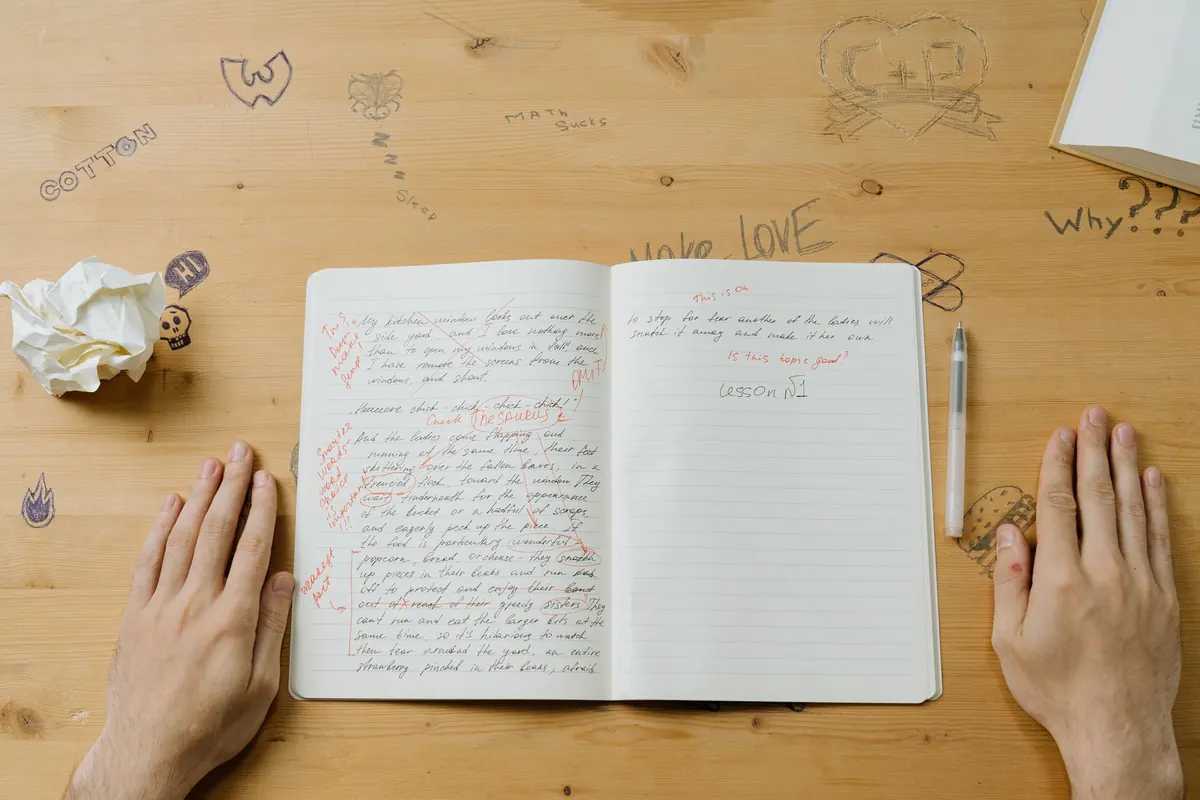
- Write by hand if you can. A notebook has no tabs to open.
- Don't stop to fix a sentence. If a word is wrong, underline it and carry on.
- Stop mid-sentence if you like. Tomorrow's session then has somewhere to begin.
Treat the prompts as doors, not assignments. If one takes you somewhere else entirely, follow it. The point is to be writing, not to answer correctly.
Prompts for Atmosphere and Sensory Detail
Autumn gives you more to work with than any other season: sound, smell, cold, the change in the light. Use these to practise noticing.
- The moment the clocks go back. Lamps on at half four, and the whole shape of the day changes.
- A walk through wet leaves, without naming a single colour.
- The first fire of the season, described from the hallway of a house that isn't yours.
- Rain on a window. Write only what can be seen through it.
- A kettle, a ticking radiator, and a room slowly warming up.
- A paragraph of taste and touch only: stew, wool, a cold spoon.
- Frost on the windscreen at seven in the morning, from inside the car.
- Someone carrying the shopping home in the dark, arms aching, handles cutting into their fingers.
Prompts for Memory and Nostalgia
Autumn is a season people remember in detail — the coat, the cold, the walk home. These prompts work best if you don't worry about whether the memory is accurate. Write what comes.
- A childhood Bonfire Night: the cold, the sparklers, the coat that was too big.
- The first conker of the year, and who you were with when you found it.
- A half-term afternoon when it rained without stopping.
- Something a grandparent cooked every October, and the pan they cooked it in.
- The last day you wore a summer jacket before the weather turned.
- Walking home from school in the dark, past the one streetlight that was out.
- A photograph you no longer have. Describe it to someone who never saw it.
Prompts for Story and Character
If you'd rather make something up than remember it, start with a person who wants something and a room they'd rather not be in.
- A character has one evening to pack up a house they've lived in for thirty years.
- Two people share a bench in November. Only one of them wants to talk.
- Someone who hates autumn. Give them a reason that has nothing to do with the weather.
- A knock at the door after dark, and what the caller is really there for.
- A character buys a second-hand coat and finds something in the pocket.
- A conversation between two people who are both pretending the heating is fine.
- A stranger returns a lost glove. Nothing else happens. Make it matter.
Prompts for Place
British autumn has its own geography — the village hall, the damp bus shelter, the reservoir path. Setting a scene precisely is often quicker than inventing a plot.
- A village hall on a Tuesday night: the stacking chairs, the urn, the noticeboard.
- A bus stop, a cancelled bus, and the person standing beside your character.
- A kitchen at six in the morning in late October, before anyone else is up.
- A charity shop window in September, and the story behind one object in it.
- A canal path or reservoir after the leaves have gone, without making it sad.
Three Starters for a Blank Page
Some evenings the prompt is too much choice. Use one of these instead.
- Begin with: "The heating came on for the first time that year, and the whole house smelled of dust."
- Write for ten minutes without stopping and end on the word again.
- Take a walk you do often. Change one thing about the weather. Follow what happens.
Making It Stick
Thirty prompts are only useful if they get used. Keep a notebook and a pen where you make your tea, so the first step is already done. Decide on a regular slot — after the washing-up, before the nine o'clock programme — and defend it for a fortnight. Two weeks is usually enough to make a habit feel normal rather than worthy.
Don't aim for finished pieces. A page of half-decent description is a good evening's work, and some of it will turn into something later. If you want a little pressure, drop the prompts into a jar and pull one out at random, or write alongside a friend and compare pages at the end of the month. Reading back what you wrote in September is one of the more enjoyable things about October.
If You Only Have Five Minutes
Describe the room you are sitting in, using three senses and no adjectives. Then write one sentence about someone who has left it. That's five minutes, and it counts. Come back tomorrow.
The nights are long from here until March. You may as well fill a few of them.
Photo: Arina Krasnikova / Pexels